
Mentorship Matters: We All Have a Role to Play in the Development of the Next Generation of Female Leaders
This is a guest post written by Kendall Gee.
Mentorship is loosely defined as “one individual having some information or a specific skill and entrusting that information or skill to someone else that did not previously have it.” But this definition feels woefully inadequate for conveying the impact and meaning that can come from a mutually beneficial mentorship. When magic happens and two people come into one another’s lives at the right time and the right place, both of their trajectories can radically change. Other times, the impact is smaller and quieter, and maybe not understood without the perspective of time.
At the CONNECT: Heart of the Farm Conference hosted by Saskatchewan Women in Ag November 6-7, 2025, in Saskatoon, there was a panel conversation about mentorship. The discussion was moderated by Clinton Monchuk, Executive Director of Farm & Food Care Saskatchewan. Three women, Sandra Hessdorfer, Kendall Gee, and Karmelle Solvason shared their perspectives on mentorship through formal programs and informal relationships. Some themes brewed up out of the discussion and this blog is a follow-up and a deeper look at the role mentorship plays in the success of Women in Ag.
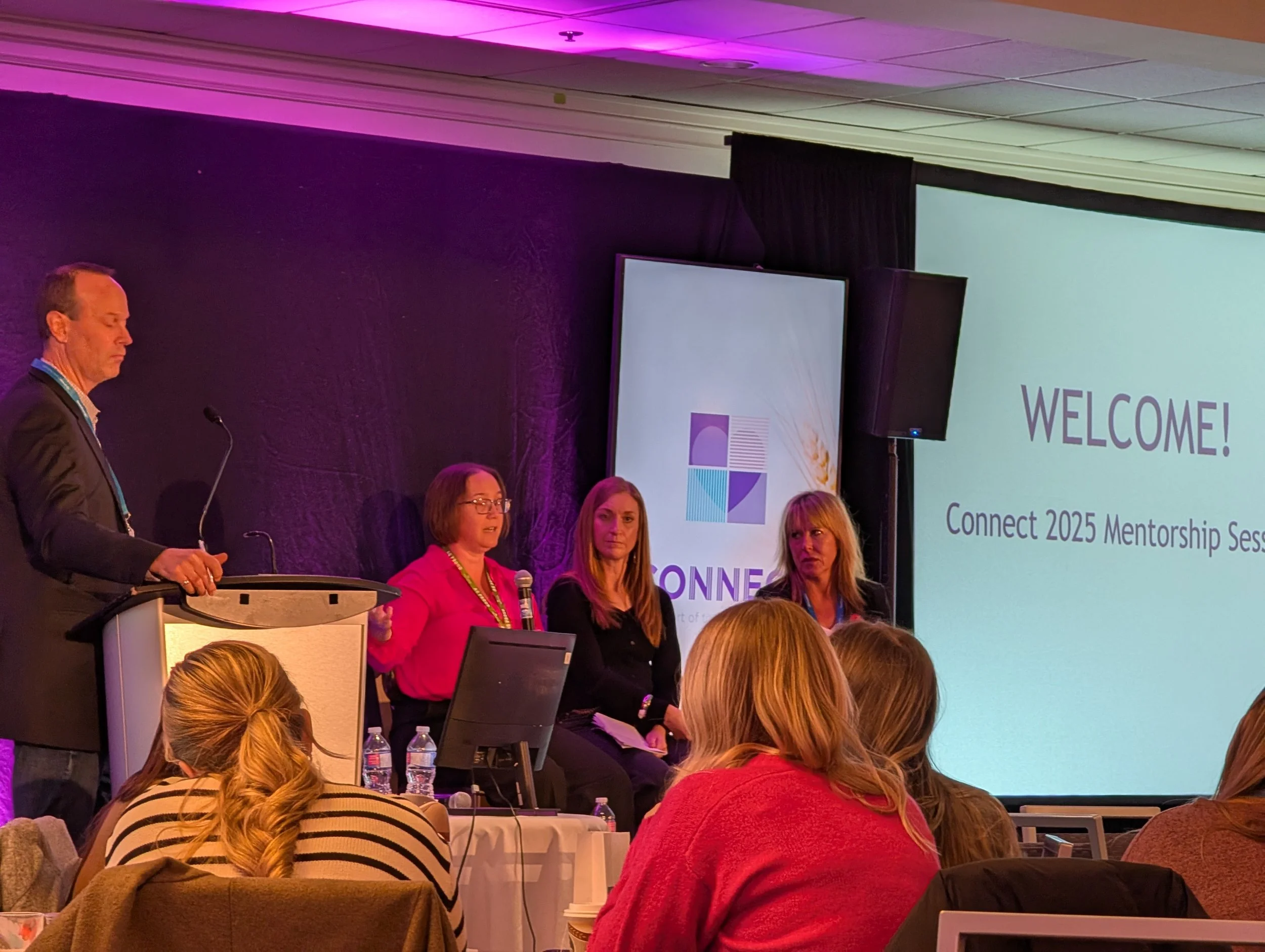
Sandra Hessdorfer (left), Kendall Gee (middle) and Karmelle Solvason (right) during the Mentorship Panel moderated by Clinton Monchuk at the 2025 Saskatchewan Women in Ag CONNECT conference.
Mentorship Can Make a Difference
The conversation started with each panelist sharing how a mentor has positively impacted them. The panelists described feeling seen, building confidence, developing soft skills and being introduced to key contacts as some of the noteworthy benefits.
Being Seen: Good mentors make us feel seen. Witnessed for our current value and for what we might be someday in the future. If we are working in a large company, it is easy to feel like a small piece of a complex puzzle that you don’t have the cover photo for anymore. As primary producers, it can feel like all that matters is how much of a commodity we produce. A good mentor can help a person see their intrinsic value not tied to output, production, or the milestones you’ve reached. They are often able to see what your strengths and capabilities are, even if they are currently unproven.
Build Confidence: A good mentor will build confidence or lend you theirs until you start to feel it yourself. They can act as an amplifier of the quiet voice inside saying “why not me?”. Or give you the confidence to realize that you do have a place at the table, no matter what you have accomplished up to this point.
Provide clarity: Sometimes seeing the vision and setting the goals is the hardest part of any big decision. A mentor can help you to see your way around perceived obstacles. Sometimes, they have already been down the path or taken their own version of a wrong turn. When someone is slightly removed from your everyday life, they can provide the much-needed perspective to help determine the next best step.
Soft skill development: We have some well-worn paths for obtaining technical skills through schooling. Soft skills that we don’t learn in school can be harder to develop. Things like how to effectively network, public speaking, navigating tough conversations, negotiation, and time management. The soft skill that came up repeatedly at the CONNECT conference was balancing the workloads of family, work, and farm life. There is value in sharing strategies that promote feeling successful in all the roles we get to play in our lives.
A positive role model: The quote “we can’t be what we don’t see” rings true in this regard. It is recognized that women continue to be under-represented in leadership roles in most industries, including agriculture. With so few women in the top jobs, it can be difficult to imagine yourself there. Getting to know a person that is successfully navigating a role that previously seemed “unattainable” makes it a real possibility. This is critical, if we want to see more women in executive positions, sitting on boards, and taking the lead as primary decision makers on farms.
Amplify your network: They say, “It’s not what you know, but who you know”. This is a common view of mentorship, and a part of why many people are resistant to entering into such a relationship. Perhaps it makes it feel transactional, as if you are looking to cash in on someone else’s success. But the truth is, most of the time, people love to feel helpful. And sometimes the right introduction is the very thing that will open doors.
Formal vs Informal Mentorship
A benefit of informal mentorships is that they often form naturally, with someone that you have good chemistry with. When you hand-pick your mentorship partner, there is a good chance that you will get along and share similar values and interests. This can be helpful in terms of ease of communication and establishing a deeper connection. A potential shortfall is that your network and knowledge base may overlap closely and not provide the same novelty as if you were paired with someone outside of your existing circle.
Formal mentorship programs have a couple of key advantages. The structure and accountability that exist can be helpful in keeping standards for the relationship and outlining guideposts for goal setting and follow-through. Both the mentee and mentor benefit from knowing what is expected of them. There is usually a known start and end date to the program, which can encourage the effective use of everyone’s time. Additionally, there are often several mentorship pairs going through the process at the same time. This can have benefits in terms of exposure to more people and all of their connections and experiences to draw from.
Over the past few years, there have been several formal mentorship programs developed under producer groups and commodity organizations. Below is a partial list of relevant mentorship programs:
Agricultural Producers Association of Saskatchewan Young Leaders Program
Saskatchewan Stock Growers Association Youth Mentorship Program
In addition to the above list, many employers offer formal mentorship programs. Some of them are not widely known about, so it may be worthwhile asking, especially if you work in any kind of corporate setting or multi-national company.
What if you are too old? There is variety in the age requirements of the formal programs listed. Some have no age limit (hint: Saskatchewan Women in Ag), while others cap the mentee age at 35, 40, or 45. If you have aged out of the programs, but feel like you would still benefit from a mentorship, is there opportunity to outline your own version? Do you have an explicit goal – a career change, a specific promotion, or a particular skill set you want to enhance? Is there an individual you have in mind? How can the answers to the above questions help guide your next steps?
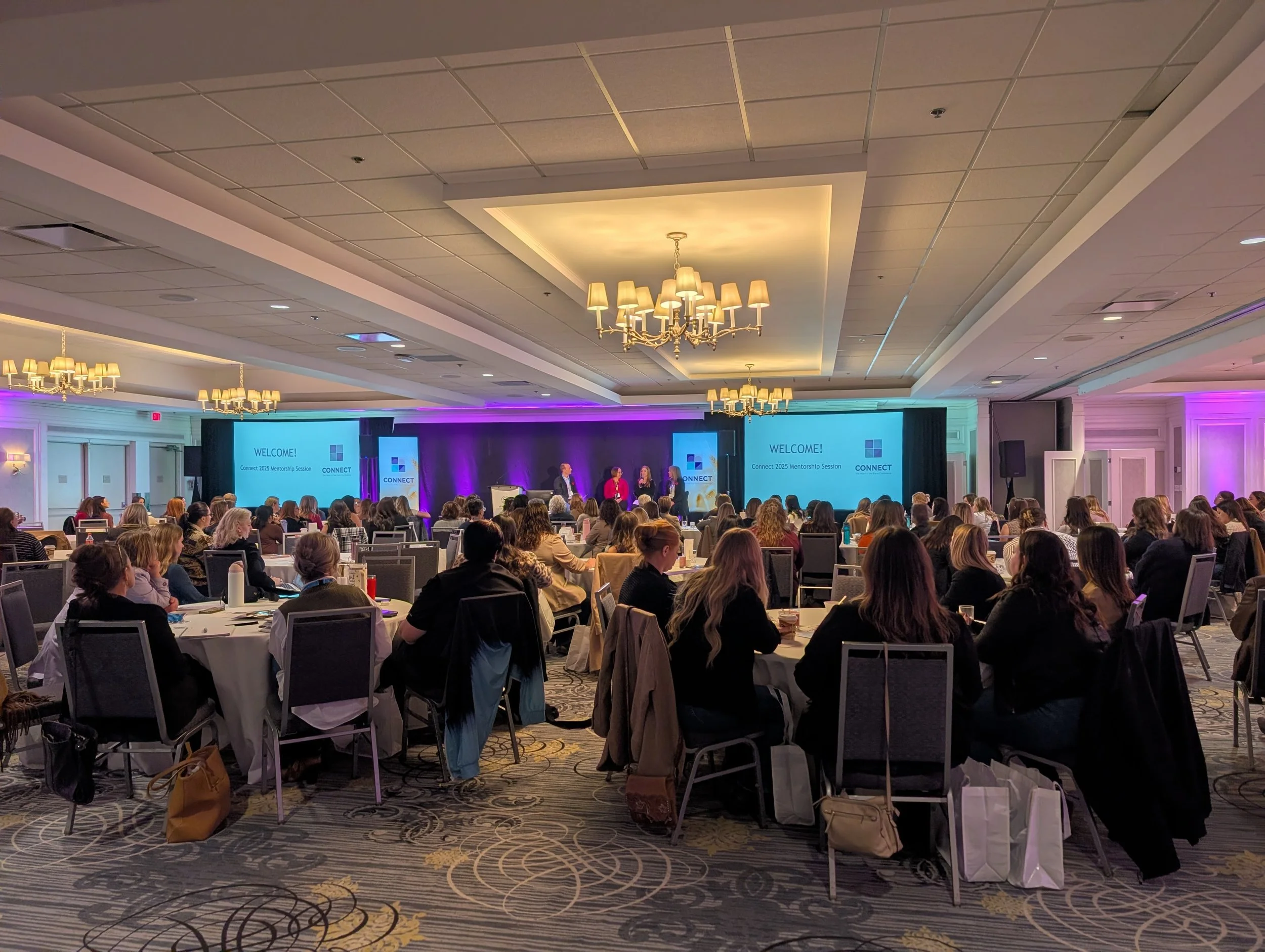
Mentorship Panel at the 2025 Saskatchewan Women in Ag CONNECT Conference
Step Up as a Mentor
If you are pushing outside the age range, it is important to remember that all these programs require mentors as well. It takes TWO people to make mentorships work.
If you are immediately struck with thoughts like; “what could I possibly have to offer a young person”? or “I haven’t accomplished all that I want to, I am in no position to offer advice”, you are not alone. This is imposter syndrome at work and most of us struggle with it. Imposter Syndrome is a pattern of thought characterized by persistent self-doubt, despite evidence of success. If you catch yourself in this kind of thought pattern and recognize it for what it is. You might ask yourself with true curiosity, “what would I be able to offer someone?”. The answer might just surprise you. Regardless of your accolades, we all have varied experiences to draw upon and a unique perspective to bring to the table.
Another common objection is, “I don’t have time”. This may be entirely true. It seems like time is the most valuable commodity and is increasingly tied up with the demands of modern life. However, as Parkinson’s Law suggests “work expands to fill the time allotted for its completion”. Whether we have five or twenty-five things on the go, the feeling of not having enough time is the same. The relationship building required for mentorship doesn’t necessarily need to take up a lot of time, especially if both parties are on the same page regarding goals. A little bit of time has the potential to have an out-sized impact.
It is not only the mentee that benefits from mentorship. There is a huge amount of personal value to be extracted from the role of mentor as well. Similar to experiencing the world through the eyes of a young child, a mentor gets to see their world from a completely different perspective. They get to learn alongside their mentee, as they reach back into old skill sets, revisit past challenges, and explore new ideas on behalf of their mentee. Additionally, it can be a lot of fun to witness the success of your partner. It is much sweeter to celebrate someone else’s wins, especially when you have had an inside look at the adversity and grit it has taken to get there.
Get Involved Today
We build mentorship up as something that is bigger than it needs to be. It is happening around us, all the time. It is the oldest form of learning. All that we know is built on the experiences and learnings of generations before us. If you want to learn how to make buns like Grandma, the fastest way is to go spend the day with Grandma. Whether we recognize it or not, we are all being mentored and mentoring constantly. So, when you have the chance, take the opportunity to get involved.
I have come to think of it as a personal responsibility to learn what I can from the people that have come before me. And equally as important, anytime I get the chance to share knowledge with someone coming up behind me, I try and give a little bit more (either time or effort) than is necessary. Knowing that if there’s even a small chance that it could make a difference in their life or career, it is worthwhile. As Sandra Hessdorfer so eloquently ended the panel discussion: “just do it, if being scared is the only thing that is stopping you, JUST DO IT! It is so worthwhile.”
